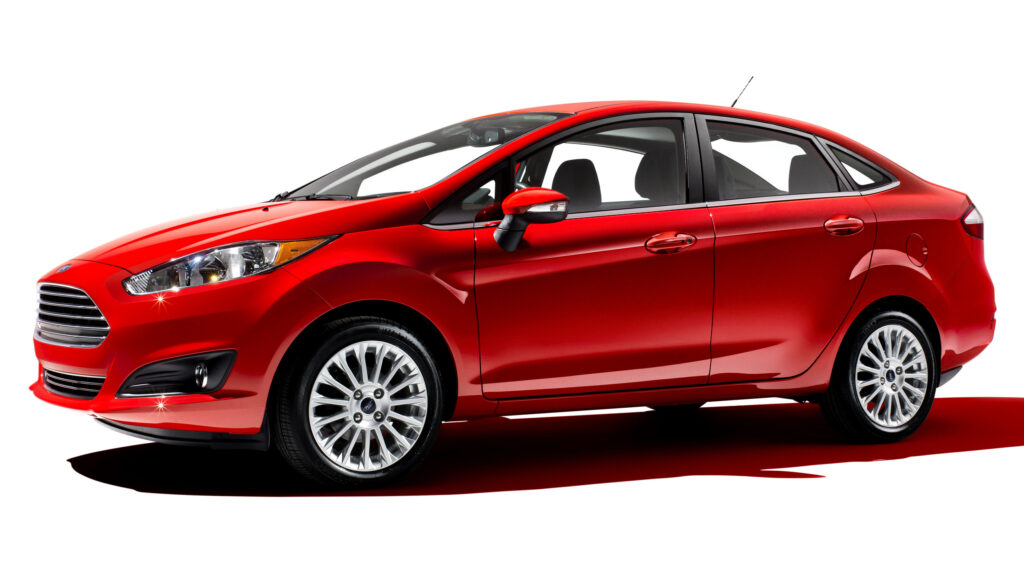
Honda and Ford killed their cheapest models — affordability crisis runs deeper
The average new vehicle transaction price in the US now hovers around $50,000. Cox Automotive argues the affordability crisis stems more from rising living costs than vehicle prices alone. However, a critical factor is missing from that analysis: automakers like Honda and Ford have eliminated their cheapest models entirely, removing budget options from the market.
Full text
Cox says affordability problems extend far beyond vehicle sticker prices.
Modern vehicles offer more technology, safety, and capability than ever before.
Missing from the discussion is the industry’s retreat from truly cheap cars.
The average new vehicle transaction price hovers around $50,000 these days, and according to Cox Automotive, that’s causing Americans to focus on the wrong culprit. In a recent analysis, the company argued that today’s affordability crisis has less to do with vehicle pricing and more to do with rising costs across nearly every aspect of daily life. It’s a compelling argument backed by plenty of data, but there’s one notable omission that makes the story far more complicated.
var adpushup = window.adpushup = window.adpushup || {que:[]};
adpushup.que.push(function() {
if (adpushup.config.platform !== "DESKTOP"){
adpushup.triggerAd("0f7e3106-c4d6-4db4-8135-c508879a76f8");
} else {
adpushup.triggerAd("82503191-e1d1-435a-874f-9c78a2a54a2f");
}
});
Read: America Is About To Tariff Itself Out Of Its Last Affordable Cars
Cox’s central point is difficult to dispute. Housing costs have climbed, insurance premiums have surged, groceries are more expensive, and borrowing money costs significantly more than it did just a few years ago. Consumers don’t evaluate a vehicle purchase in isolation. They do it while juggling mortgage payments, utility bills, healthcare expenses, and everything else competing for a spot in the monthly budget.
Today’s Base Model Was Yesterday’s Luxury
var adpushup = window.adpushup = window.adpushup || {que:[]};
adpushup.que.push(function() {
if (adpushup.config.platform === "DESKTOP"){
adpushup.triggerAd("ea4d4b5a-f8e5-4d5d-9d9a-53a3b956b6cd");
} else{
adpushup.triggerAd("44c0a4dc-e25b-4ba5-ac64-2c510461b92a");
}
});
Erin Keating, executive analyst at Cox Automotive, also makes a strong case that today’s vehicles offer substantially more value than their predecessors. Features such as automatic emergency braking, adaptive cruise control, lane-keeping assistance, smartphone integration, and large infotainment screens have become commonplace.
Cox Automotive
A decade ago, many of those technologies were either unavailable or reserved for premium trims. Viewed through that lens, a modern vehicle is objectively more capable than the one it replaced.
Cox points to the Honda CR-V as an example. Sure, it’s nearly $10,000 more expensive than it was a decade ago, but it’s also dramatically improved. In other words, consumers are paying more dollars, but they’re also getting more vehicle. That’s where the analysis starts to get uncomfortable.
2016 Honda CR-V
In 2016, automakers offered plenty of genuinely inexpensive cars. Remember cars like the Honda Fit, Chevrolet Spark, Ford Fiesta, and Nissan Versa? Vehicles like that basically don’t exist anymore. Even when affordable entry-level trims remain available, they’re often produced in smaller numbers than the better-equipped versions dealers prefer to stock.
Also: Used Hybrid And EV Prices Have Jumped $3,600 Even After The Tax Credit Died
var adpushup = window.adpushup = window.adpushup || {que:[]};
adpushup.que.push(function() {
if (adpushup.config.platform !== "DESKTOP"){
adpushup.triggerAd("bb7964e9-07de-4b06-a83e-ead35079d53c");
} else {
adpushup.triggerAd("9b1169d9-7a89-4971-a77f-1397f7588751");
}
});
2026 Honda CR-V
In that context, it’s difficult to separate consumer demand from industry strategy. Buyers may be choosing more expensive vehicles, but they’re doing so in a marketplace with fewer low-cost alternatives than existed a decade ago.
Cox isn’t wrong outright. The rising cost of everything is squeezing buyers. But if the auto industry wants an honest conversation about affordability, it needs to acknowledge its own role in moving the market upscale. The car isn’t the only villain in America’s affordability story. But it’s probably not just an innocent bystander either.
var adpushup = window.adpushup = window.adpushup || {que:[]};
adpushup.que.push(function() {
if (adpushup.config.platform !== "DESKTOP"){
adpushup.triggerAd("bb7964e9-07de-4b06-a83e-ead35079d53c");
} else {
adpushup.triggerAd("9b1169d9-7a89-4971-a77f-1397f7588751");
}
});
Ford
Should automakers be required to keep affordable entry-level cars in their lineup?
Comments
No comments yet




















Comments
No comments yet — be the first to weigh in 👇
No comments yet. Be the first!