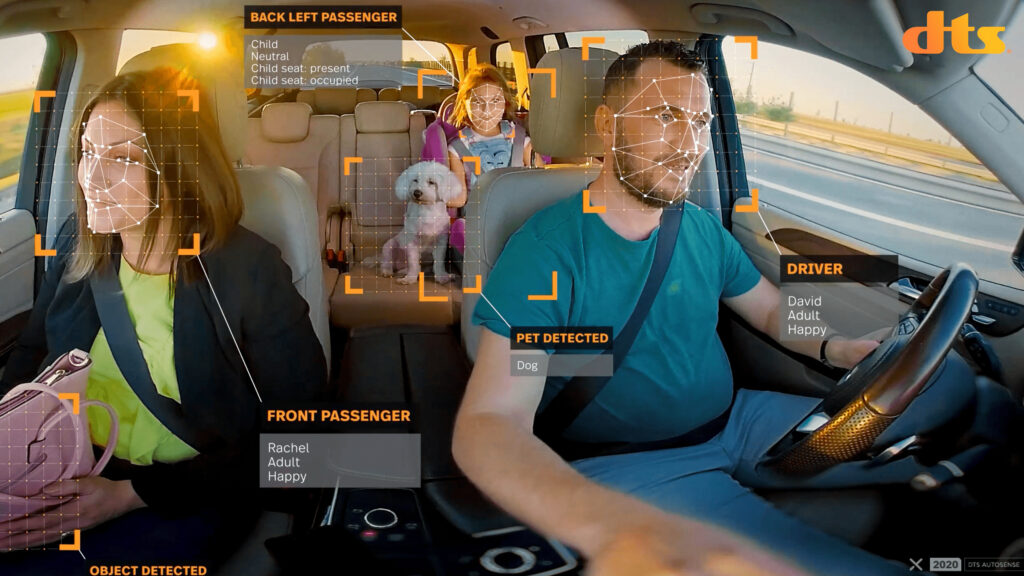
EU mandates eye-tracking driver cameras in all new cars from 7 July
From 7 July 2026, every new passenger car and van sold in the EU must carry an eye-tracking driver-monitoring camera, as required by the bloc's updated General Safety Regulation. The system triggers an alarm if the driver looks away from the road for 3.5 seconds. While many carmakers already offered similar hardware voluntarily, the law now makes it mandatory across the board, raising privacy concerns among critics.
Full text
EU mandates driver-facing cameras for all new cars.
Systems trigger alarms if the driver looks away for 3.5 seconds.
The mandatory safety measure has triggered privacy concerns.
The European Union has switched on the final phase of its updated General Safety Regulation, and the headline requirement lands squarely on the driver. As of July 7, every new passenger vehicle sold in the bloc must carry an eye-tracking driver-monitoring system. Plenty of automakers already run some version of this hardware for fatigue warnings, but the law turns an optional feature into a legal requirement across all new cars and vans.
var adpushup = window.adpushup = window.adpushup || {que:[]};
adpushup.que.push(function() {
if (adpushup.config.platform !== "DESKTOP"){
adpushup.triggerAd("0f7e3106-c4d6-4db4-8135-c508879a76f8");
} else {
adpushup.triggerAd("82503191-e1d1-435a-874f-9c78a2a54a2f");
}
});
American drivers shouldn’t treat this as a distant European problem. Federal safety programs aimed at impaired and distracted driving move toward the USA’s own mandatory rollout of driver monitoring systems for new cars by 2027, so the tech arriving in European showrooms today is a preview of what lands stateside tomorrow.
Review: We Play Passenger With Stellantis Hands-Free Active Driving Assist
The EU’s sweeping mandate is expected to affect an estimated 15 million vehicles per year. Among its requirements is the so-called Advanced Driver Distraction Warning (ADDW) system, which relies on dashboard-integrated infrared sensors and software capable of analyzing precise head and eye movements .
var adpushup = window.adpushup = window.adpushup || {que:[]};
adpushup.que.push(function() {
if (adpushup.config.platform === "DESKTOP"){
adpushup.triggerAd("ea4d4b5a-f8e5-4d5d-9d9a-53a3b956b6cd");
} else{
adpushup.triggerAd("44c0a4dc-e25b-4ba5-ac64-2c510461b92a");
}
});
BMW
The software maps out specific zones of the interior, reserving its closest attention for the lower portions of the cabin, including the instrument cluster, the infotainment display, the steering wheel, the dashboard, and the center console.
More: A $10 Ronaldo Doll Head Is Fooling Tesla So Drivers Can Doze Off
If the driver keeps their eyes fixed in this area for more than 6 seconds at speeds between 20-50 km/h (12-31 mph), or for more than 3.5 seconds when going faster than that, they get visual and acoustic warnings. To prevent false alarms, the software builds in a minimum tolerance of 50 milliseconds.
Driver Distraction Is The Enemy
var adpushup = window.adpushup = window.adpushup || {que:[]};
adpushup.que.push(function() {
if (adpushup.config.platform !== "DESKTOP"){
adpushup.triggerAd("bb7964e9-07de-4b06-a83e-ead35079d53c");
} else {
adpushup.triggerAd("9b1169d9-7a89-4971-a77f-1397f7588751");
}
});
The legislation is driven by the European Commission’s estimate that between 10% and 30% of traffic accidents in Europe stem from driver distraction. Lawmakers reckon the driver monitoring system could save 25,000 lives by 2038.
The American data tells the same story. The National Highway Traffic Safety Administration ( NHTSA ) ties driver distraction to 16% of all fatal collisions, 21% of injury crashes, and 22% of every automotive accident in the States.
Buyer Concerns
Renault
While improving road safety is a noble goal, the way these systems actually behave is already fueling a backlash. Automotive reviewers claim they often trigger false alarms by mistaking a normal blinking pattern and ordinary head movements for drowsiness, then nagging the driver to take a break. Others see one more mandated electronic package that could further inflate the cost of their new car.
var adpushup = window.adpushup = window.adpushup || {que:[]};
adpushup.que.push(function() {
if (adpushup.config.platform !== "DESKTOP"){
adpushup.triggerAd("b25ecba7-3bbb-4ea7-a3a8-dbea91695c07");
} else {
adpushup.triggerAd("e46c436a-adeb-4b5e-a2c7-56bc36561c10");
}
});
More: The Feds Could Soon Clear The Way For A Tesla With No Brake Pedal
The most serious concern, though, has to do with privacy. On paper, the official EU text explicitly states that the ADDW system must function as a closed-loop architecture. Yet privacy advocates warn that regulators have yet to set up any independent auditing mechanisms to confirm manufacturers are actually following the rules.
As reported by Risky Business , citing Belgium’s VRT channel, Volvo openly admitted that its driver-monitoring architecture processes real-time data on secure external cloud servers, contradicting the closed-loop guidelines.
Volvo
That admission is troubling given the automotive industry’s track record with consumer data . Giants like GM, Hyundai and Kia have been caught tracking driving habits and selling that telemetry to data brokers, who then pass it to insurance companies to jack up customer premiums.
More: He Braked Hard Once, Then His Insurance Jumped $100 A Month
The hope, and it is only that, is that regulators might actually do their job and stop modern vehicles from turning into high-tech corporate spies.
Other Requirements
Besides the driver monitoring system, the new legislation requires all new passenger cars and vans to come standard with a more advanced AEB featuring pedestrian and cyclist detection. Automakers must also provide better forward vision in their models, expand the safety glass area that protects pedestrians during collisions, and run extra tests for worn tires.
View this post on Instagram
A post shared by European Commission 🇪🇺 (@europeancommission)
Lead image DTS Xperi
Do mandatory driver-facing eye-tracking cameras violate privacy?
Comments
No comments yet











Comments
No comments yet — be the first to weigh in 👇
No comments yet. Be the first!