Full text
General Motors wants its major suppliers to become highly automated.
Some fear that not meeting GM’s demands could impact future business.
Company is asking suppliers to rank their level of automation on a 5-point scale.
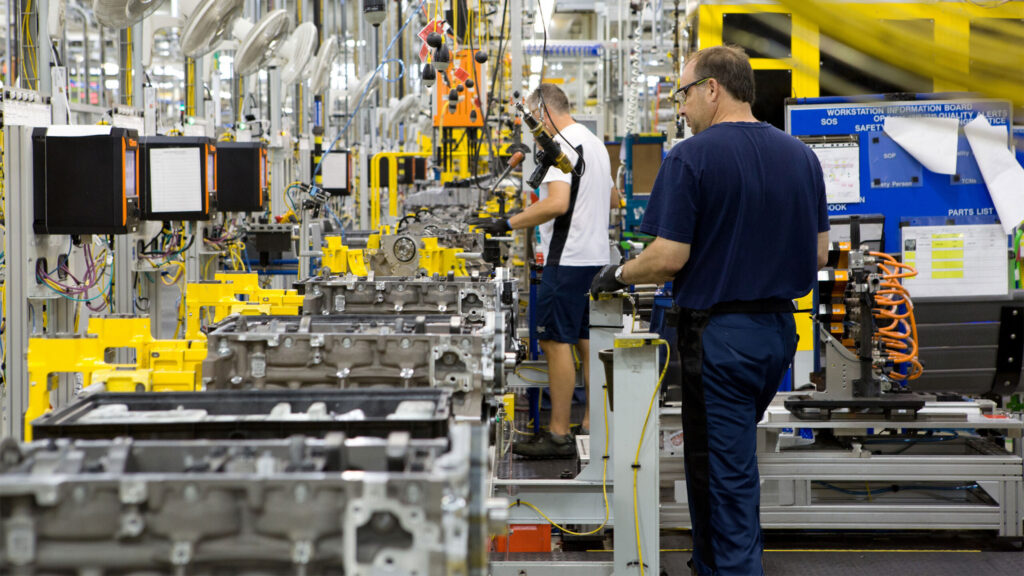
Several GM suppliers could lose out on future business if they do not meet the requirements of a new automation policy announced by the manufacturer. The novel program leans hard on robotics and artificial intelligence to overhaul how parts get built, and GM says it will create a “resilient, world-class” supply chain, though it may come at the expense of human jobs.
var adpushup = window.adpushup = window.adpushup || {que:[]};
adpushup.que.push(function() {
if (adpushup.config.platform !== "DESKTOP"){
adpushup.triggerAd("0f7e3106-c4d6-4db4-8135-c508879a76f8");
} else {
adpushup.triggerAd("82503191-e1d1-435a-874f-9c78a2a54a2f");
}
});
In March, GM started sending out a survey to its suppliers as part of the launch of its Overall Automation Maturity Index (OAMI). The premise is quite simple. Suppliers have been asked to audit their manufacturing operations and score their level of automation , using a list of criteria from GM. The assessment covers the entire manufacturing process, from raw material purchasing through production and final delivery. In some cases, GM is also auditing supplier plants
Five Levels, One High Bar
There are five different levels of automation. They start with manual and extend to include basic mechanization, semiautomation, integrated automation, and smart factory/adaptive automation. According to Crain’s Detroit , GM is asking a lot from its suppliers, setting them a target of 4.5 out of 5. Several supplier executives told Crain’s they believe the expectation is to work toward that target or risk missing future business, even though GM says there is no single deadline for achieving it.
var adpushup = window.adpushup = window.adpushup || {que:[]};
adpushup.que.push(function() {
if (adpushup.config.platform === "DESKTOP"){
adpushup.triggerAd("ea4d4b5a-f8e5-4d5d-9d9a-53a3b956b6cd");
} else{
adpushup.triggerAd("44c0a4dc-e25b-4ba5-ac64-2c510461b92a");
}
});
Read: GM Added 50 ‘Cobots’ To A Plant Where It Just Laid Off Over 1,000 Workers
The stakes aren’t hypothetical. Around 50 Fanuc cobots recently went in at GM’s Factory Zero in Detroit, where more than 1,000 workers remain laid off, and the UAW is furious. Union president Shawn Fain has cast artificial intelligence and mass automation as a profound threat, branding the shift a fight for humanity.
Although GM insists the policy is not a mandate and that suppliers have not been given deadlines to achieve autonomy targets, some suppliers believe that those who fail to meet the standards could lose out on future business. The car manufacturer insists it wants to help its suppliers.
GM Has Its Say
“Ultimately, we are here to partner with and help suppliers set benchmarks and increase their productivity, safety, quality, and competitiveness,” GM spokesman Patrick Sullivan told the publication. “Our suppliers determine how best to run their operations, and we look to work alongside those who share our commitment to continuously improving how we safely deliver the highest quality of vehicles for our customers.”
var adpushup = window.adpushup = window.adpushup || {que:[]};
adpushup.que.push(function() {
if (adpushup.config.platform !== "DESKTOP"){
adpushup.triggerAd("bb7964e9-07de-4b06-a83e-ead35079d53c");
} else {
adpushup.triggerAd("9b1169d9-7a89-4971-a77f-1397f7588751");
}
});
Making significant automation changes might be hard for some suppliers. Many are concerned about what it costs, who funds it, and how any savings get split with GM. Others question whether the policy forces automation into plants where it doesn’t belong.
What A Perfect Score Could Look Like
For suppliers to score a rating of 5, they will need to have very few workers actually working hands-on to build parts. In fact, human operators are simply there to serve as supervisors, strategic planners, and exception managers, with minimal direct involvement in operations. It’s a sign of things to come, where automation and robots are shaping up to take millions of jobs across several industries.
var adpushup = window.adpushup = window.adpushup || {que:[]};
adpushup.que.push(function() {
if (adpushup.config.platform !== "DESKTOP"){
adpushup.triggerAd("bb7964e9-07de-4b06-a83e-ead35079d53c");
} else {
adpushup.triggerAd("9b1169d9-7a89-4971-a77f-1397f7588751");
}
});

















Comments
No comments yet — be the first to weigh in 👇
No comments yet. Be the first!