US Strikes Iran's Greater Tunb Island as Naval Blockade Resumes, Iran Claims Hits on US Bases
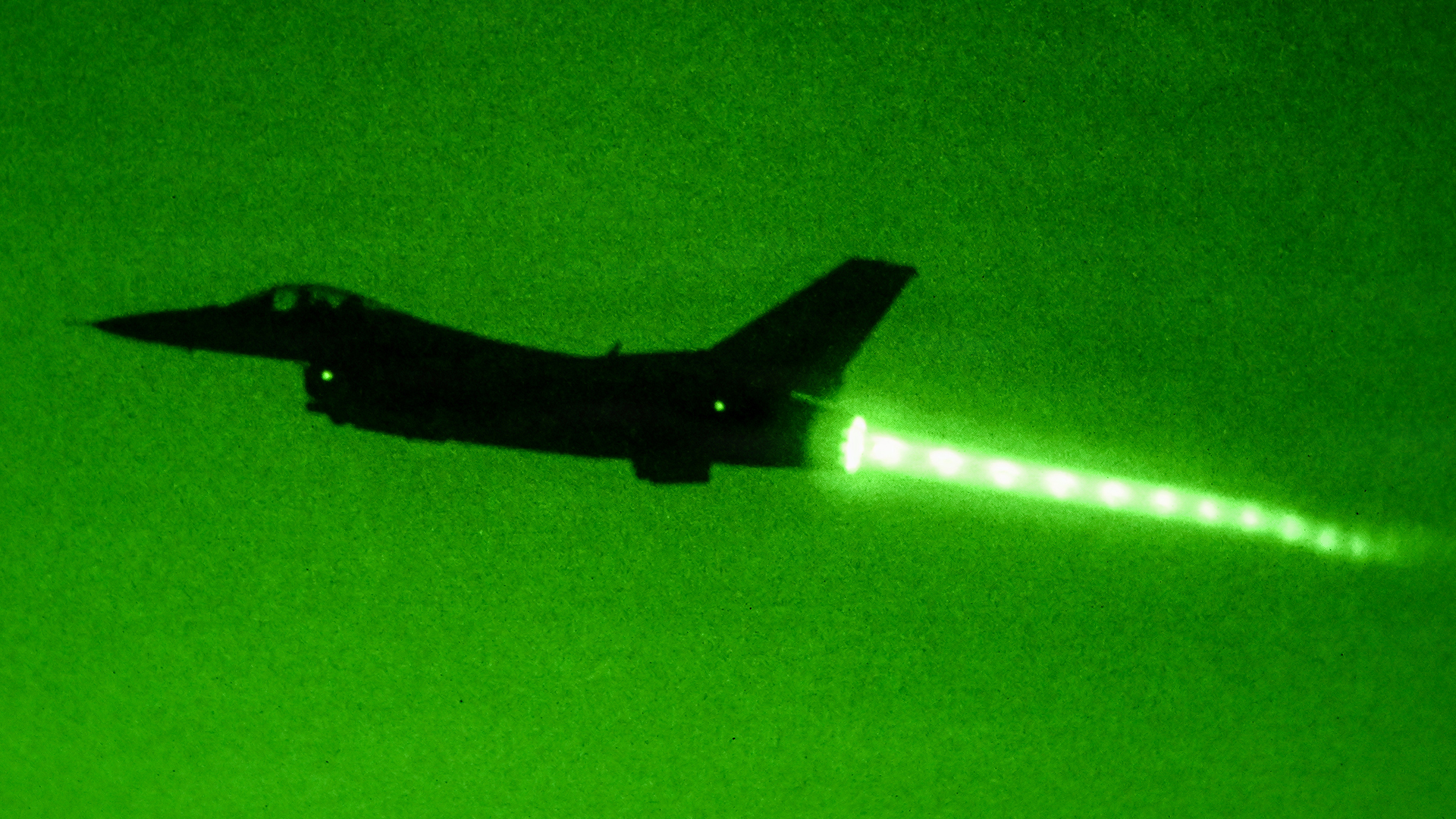
US Central Command (CENTCOM) struck Iran's Greater Tunb Island in the Strait of Hormuz, targeting coastal defence systems and cruise missile storage sites in a 90-minute wave of precision strikes. The attacks coincided with the first full day of a restored US naval blockade on Iranian ports, with ships being ordered to turn back. Iran countered by claiming its missiles and drones had struck several US military facilities in the region.
Full text
U.S. Central Command (CENTCOM) on Wednesday unleashed a new wave of strikes on Iranian targets. The attacks, on Iran’s Greater Tunb Island, came as the newly restored blockade on Iranian ports entered its first full day and the command began ordering ships headed to Iran to turn around. Meanwhile, Iran claims it damaged several U.S. military facilities in new rounds of missile and drone attacks in the region.
“CENTCOM launched precision munitions against coastal defense systems and cruise missile storage and launch sites on Greater Tunb Island during the 90-minute wave,” the command stated on X. “The strikes further degraded Iran’s ability to attack commercial shipping in the Strait of Hormuz.” The island, located at the western mouth of the Strait, sits about 30 miles south of the Iranian coast and about 50 miles northwest of the United Arab Emirates (UAE), which also lays claim to it, along with the Abu Musa and Lesser Tunb islands that Iran seized in 1971.
US Central Command carried out a 90-minute wave of strikes against coastal defense systems and cruise missile storage and launch sites on Greater Tunb Island on Wednesday, further degrading Iran's ability to attack commercial shipping in the Strait of Hormuz, CENTCOM said. pic.twitter.com/8GpPtZKAIW
— Iran International English (@IranIntl_En) July 15, 2026
Greater Tunb Island was a frequent target during Operation Epic Fury. A little more than two miles across at its widest point, it hosts a “vast network of underground bunkers,” created by the Islamic Revolutionary Guard Corps (IRGC), according to the Israeli Alma Research and Education Center think tank. “These underground facilities are believed to be storing anti-ship missiles and other weapons threatening freedom of navigation and commerce through the Strait of Hormuz.”
Greater Tunb Island. (Google Earth)
In a subsequent X post, CENTCOM stated that since “restarting the naval blockade against Iranian ports 17 hours ago, U.S. forces have redirected 2 commercial vessels attempting to run the blockade. The U.S. military remains vigilant and prepared to ensure full compliance.”
Since restarting the naval blockade against Iranian ports 17 hours ago, U.S. forces have redirected 2 commercial vessels attempting to run the blockade. The U.S. military remains vigilant and prepared to ensure full compliance. pic.twitter.com/E00JAlmBua
— U.S. Central Command (@CENTCOM) July 15, 2026
In its announcement on Tuesday that the blockade had been reimposed, CENTCOM stated that there are “currently more than 20 U.S. Navy warships and hundreds of military aircraft operating across the Middle East. American forces remain vigilant, lethal, and ready.”
U.S. forces resumed the naval blockade against vessels transiting to and from Iranian ports and coastal areas today at 4 p.m. ET.
There are currently more than 20 U.S. Navy warships and hundreds of military aircraft operating across the Middle East. American forces remain… pic.twitter.com/ATRJHlLQNo
— U.S. Central Command (@CENTCOM) July 14, 2026
Control over the Strait has been at the center of most of the flare-ups of violence that have taken place after a shaky ceasefire was agreed to by the U.S. and Iran on April 8. They’ve often involved Iranian attacks on commercial shipping in the Strait followed by U.S. kinetic responses. However, these kinetic encounters have been intensifying over the past five days, leading President Donald Trump to order the resumption of the naval blockade on Iranian ports. It went into effect at 11:30 PM local time on Tuesday.
President Trump on the blockade on the Hormuz Strait: "I don't think anybody should be able to charge a fee for the Strait or for any other Strait-relationship in terms of other sections of the world… but we were doing it as a reimbursement." pic.twitter.com/ZNAdSa7wSl
— CSPAN (@cspan) July 14, 2026
As we have frequently noted , the blockade was lifted on June 17 when the U.S. and Iran signed a 14-point Memorandum of Understanding (MoU). The MoU provided a 60-day extension of the ceasefire to iron out an agreement to end fighting throughout the region, including Lebanon, prevent Iran from seeking nuclear weapons, end U.S. sanctions and resume the flow of traffic through the Strait of Hormuz, among other points.
Iran, as we noted earlier in this story, said it carried out a number of retaliatory strikes on Kuwait, Bahrain and Jordan as it has over the past five days. All three nations host an array of U.S. military facilities.
The Iranian Army’s public relations office said it “launched a seventh wave of drone strikes on U.S. bases in the region on Wednesday, targeting F-18 facilities and support infrastructure at al-Azraq in Jordan,” Iran’s official Mehr news outlet stated on Wednesday . The strikes “were part of ‘Operation Thunderbolt’ and followed six earlier waves of drone attacks on U.S. positions since the American violation of the ceasefire and the start of ‘brutal attacks’ on Iranian territory.”
The Iranian army launched a seventh wave of drone strikes on U.S. bases in the region on Wednesday, targeting F-18 facilities and support infrastructure at al-Azraq in Jordan. https://t.co/hpqsv0WImA
— Mehr News Agency (@MehrnewsCom) July 15, 2026
TWZ cannot independently confirm Iran’s claims and CENTCOM declined comment.
“Jordan’s military intercepted three Iranian missiles,” The New York Times reported, citing a statement carried by the official Petra news agency. “The Kuwait Army said earlier that its air defenses were intercepting hostile targets, while Bahrain’s interior ministry said warning sirens had been activated. None of the countries have reported damage or casualties from strikes on Wednesday.”
However, images and videos have emerged online purporting to show damage at several installations in the wake of Iranian attacks over the past several days.
The following post on X uses satellite imagery from Iranian state media to claim damage to an anti-drone radar system at Prince Hassan Air Base in Jordan; however, its low resolution makes it hard to confirm that claim.
Satellite imagery released from Iran's state media shows damage to an anti-drone surveillance system at Prince Hassan Air Base, Jordan. The imagery was georeferenced by our community on Soar Atlas.
Explore and Compare: https://t.co/IbkWzagvbI #IranWar #Iran #MiddleEast pic.twitter.com/5xBjsiuM4s
— Soar (@SoarAtlas) July 15, 2026
Video shared on social media and verified by The New York Times showed an Iranian drone hitting the area surrounding an already burning warehouse in Kuwait late on Tuesday night local time.
“The IRGC claimed that the warehouse in Mina Abdulla was a logistics and supply hub for U.S. forces in the region,” the publication noted.
A drone hit a warehouse in the port town of Al Shuaiba in Kuwait. Kuwait Army confirmed in a statement that several vital and civilian facilities were targeted by Iranian forces https://t.co/uiaGIraLIa pic.twitter.com/1WJGdBKhB2
— Reuters (@Reuters) July 15, 2026
Iranian officials also claimed that “seven members of the 388th Iranshahr Brigade, including permanent personnel and conscripts, were killed during a U.S. strike on one of the Iranian Army Ground Force bases in Bampur early on Wednesday,” according to the IRGC-connected Tasnim news outlet .
Located in southern Iran, Bampur is about 120 miles north of the Gulf of Oman. TWZ cannot verify these claims either.
Seven personnel of Iran’s Army Ground Force were martyred after the US military launched a missile attack on an Army base in Bampur, in the southeastern province of Sistan and Baluchestan, the Army said, vowing a decisive response to the “heinous crime.” https://t.co/v8v7DwAps3 pic.twitter.com/kED98QGljV
— Tasnim News Agency (@Tasnimnews_EN) July 15, 2026
This latest wave of strikes came after Trump on Tuesday warned that the U.S. would strike bridges and power plants in Iran “next week” unless Tehran returns to the negotiating table.
“We’re going to hit them very hard tomorrow night,” Trump proclaimed in an interview with Fox News . “We’re going to hit them very hard the night after, and then next week it gets really bad for them, because next week comes the power plants. Next week comes the bridges. We’re going to knock out all their power plants. We’re going to knock out all their bridges unless they get to the table and negotiate.”
PRESIDENT TRUMP: “Ultimately, we'll hit energy targets in Iran. Next week comes the bridges. We're going to knock out all of their power plants. We'll knock out all of their bridges unless they get to the table and negotiate” pic.twitter.com/CwbiDxHcwx
— Open Source Intel (@Osint613) July 14, 2026
The U.S. leader also rescinded his threat to impose a 20% toll on Strait of Hormuz transits.
“I was called by different people, different countries, kings and emirs,” Trump said Tuesday, shortly after announcing the fee reversal. “And they’ve said, ‘We’d love to do it a different way. We’d love to invest in the United States with billions and billions of dollars. I like that actually because I don’t think anybody should be able to charge a fee for the Strait or for any other strait.”
President Trump said Tuesday he changed his mind on charging 20% Strait of Hormuz cargo fees after many countries called him.
"I was called by different people, different countries, kings and emirs,” Trump said shortly after announcing the fee reversal. “And they’ve said, 'We'd… pic.twitter.com/8IaHfltzKT
— CBS News (@CBSNews) July 14, 2026
Trump, as we reported yesterday , has also again raised the specter of a strike on a very hardened Iranian nuclear facility known as Pickaxe Mountain, saying it is ripe for a “nice big fat shot right in the front door.” You can read more about that in our deep dive here .
Trump’s Threat To Strike Iran’s Pickaxe Mountain Bunker’s “Front Door” Underscores Targeting Challenges
Pickaxe Mountain is Iran’s hardest-to-reach facility and Trump saying he may take a “shot right in the front door” wasn’t likely just small talk. https://t.co/SsDnvtAGXZ
— TWZ (@thewarzonewire) July 14, 2026
Iranian officials on Wednesday reacted to Trump’s statement about attacks on bridges and power plants, saying that: “Wherever the Americans strike, our Armed Forces will respond in the same manner.”
In addition, the Islamic Republic has no intention of returning to the bargaining table, Foreign Ministry spokesperson Esmaeil Baghaei told Iranian media on Wednesday .
“We currently have no plans for negotiations and remain focused on defending the country,” Baghaei told reporters.
BREAKING
Iran’s Deputy Foreign Minister on the U.S. striking Power Plants and Bridges:
“Wherever the Americans strike, our Armed Forces will Respond in the same Manner
This Strategy by Washington has already Failed once” pic.twitter.com/PiYymrgeqk
— Iran Observer (@IranObserver0) July 15, 2026
While Trump and Iran are ramping up the rhetoric, there is also tremendous global and domestic pressure on the American leader to refrain from expanding the fighting. In just one example of that playing out, the per barrel price of Brent crude jumped from a recent low of just over $75 a barrel on July 13 to more than $84 a barrel this morning as the attacks are intensifying.
Meanwhile, the MarineTraffic maritime tracking organization reported a slight uptick in Strait of Hormuz transits yesterday. However, the outlook for future traffic is grim given the unfolding security situation, including the renewed blockade, the organization posited.
Strait of Hormuz risks deepen despite slight rise in crossings
Vessel activity through the Strait of Hormuz increased slightly on 14 July, with 21 confirmed crossings recorded, according to #MarineTraffic data. Commercial traffic accounted for most movements, including vessels… pic.twitter.com/oIkrtu2kGl
— MarineTraffic (@MarineTraffic) July 15, 2026
Trump also faces domestic headwinds, with the November mid-term elections fast approaching and the conflict is unpopular among American voters.
Still, the fighting rages on, and the fact that the U.S. Navy is once again forcing ships away from Iran is a significant step back up the escalation ladder given that the now tattered MoU called for the blockade to end. We will continue to monitor this situation and provide updates when warranted.
Contact the author: howard@twz.com
The post First Full Day Of Resumed U.S. Blockade On Iranian Ports Erupts In New Attacks appeared first on TWZ .
Should the US maintain the naval blockade on Iranian ports?
Comments
No comments yet














Comments
No comments yet — be the first to weigh in 👇
No comments yet. Be the first!