Full text
Chinese automakers are rapidly expanding new dealer networks across Canada.
Experts say entering America later could be surprisingly straightforward for brands.
Limited Canadian sales now matter less than bigger potential US opportunities later.
Several Chinese brands are preparing Canadian launches despite strict limits on vehicle imports and relatively modest sales prospects. But the appeal of the Canadian market has less to do with immediate profits and more to do with what it could teach manufacturers ahead of a potential future move into the United States, a new report says.
var adpushup = window.adpushup = window.adpushup || {que:[]};
adpushup.que.push(function() {
if (adpushup.config.platform !== "DESKTOP"){
adpushup.triggerAd("0f7e3106-c4d6-4db4-8135-c508879a76f8");
} else {
adpushup.triggerAd("82503191-e1d1-435a-874f-9c78a2a54a2f");
}
});
Canada recently opened the door to a limited number of Chinese -built EVs, allowing imports under a quota system that starts at 49,000 vehicles annually. That’s hardly enough volume to transform anyone’s balance sheet, especially when multiple brands are competing for the same customers.
Related: Canada Tells Chinese Brands They Can Sell EVs Past The Quota, On One Condition
Yet automakers including Chery, BYD, Changan and Lotus are all making plans. Some are recruiting dealers, others are carrying out testing programs, and several are already preparing vehicles for regulatory approval. And the reason they’re going to all of that trouble, Reuters reports, is that Canada’s automotive market looks remarkably similar to America’s.
var adpushup = window.adpushup = window.adpushup || {que:[]};
adpushup.que.push(function() {
if (adpushup.config.platform === "DESKTOP"){
adpushup.triggerAd("ea4d4b5a-f8e5-4d5d-9d9a-53a3b956b6cd");
} else{
adpushup.triggerAd("44c0a4dc-e25b-4ba5-ac64-2c510461b92a");
}
});
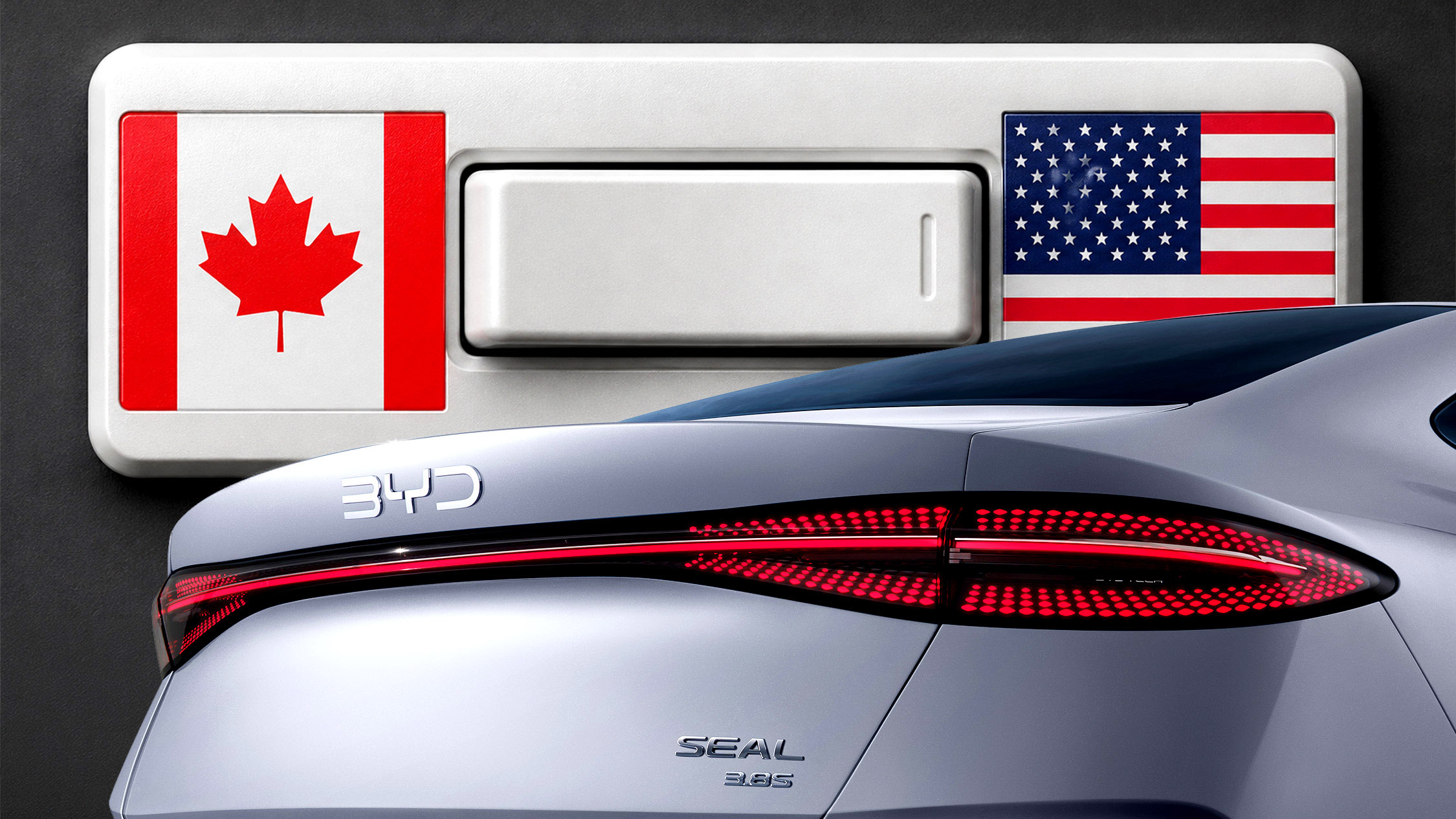
Consumer preferences and budgets overlap heavily, regulations are broadly comparable and dealership structures operate in much the same way. That means any company that successfully establishes itself in Canada could gain valuable experience before eventually tackling the much larger US market.
Dan Hearsch, global co-leader of AlixPartners’ automotive practice, told Reuters that moving from Canada into the United States later would be like “flipping a switch.”
Eyes On The US Prize
Robert Karwel of J.D. Power Canada was even more direct in the same report, describing Canada as “the practice run for the US.”
That prospect continues to worry parts of the American auto industry. For years China was a growth market for Western brands, but now the tables have turned and Chinese automakers have rapidly expanded their global footprint over the past decade.
var adpushup = window.adpushup = window.adpushup || {que:[]};
adpushup.que.push(function() {
if (adpushup.config.platform !== "DESKTOP"){
adpushup.triggerAd("bb7964e9-07de-4b06-a83e-ead35079d53c");
} else {
adpushup.triggerAd("9b1169d9-7a89-4971-a77f-1397f7588751");
}
});
For now, the US remains effectively closed to China. Tariffs, restrictions on connected vehicle technology and political opposition continue to keep Chinese brands at arm’s length. Only this week Geely-controlled Polestar was effectively forced to pull out of the US due the Chinese software in its cars, despite Volvo (also Geely-controlled) recently being given a hall pass for the same thing.
But several executives appear confident that won’t always be the case.
“We definitely have the idea of selling cars in the United States,” Chery International president Zhang Guibing told reporters during a recent event in China, Reuters writes. “Everyone definitely has that idea.”
var adpushup = window.adpushup = window.adpushup || {que:[]};
adpushup.que.push(function() {
if (adpushup.config.platform !== "DESKTOP"){
adpushup.triggerAd("bb7964e9-07de-4b06-a83e-ead35079d53c");
} else {
adpushup.triggerAd("9b1169d9-7a89-4971-a77f-1397f7588751");
}
});
BYD, Geely, Chery




















Comments
No comments yet — be the first to weigh in 👇
No comments yet. Be the first!