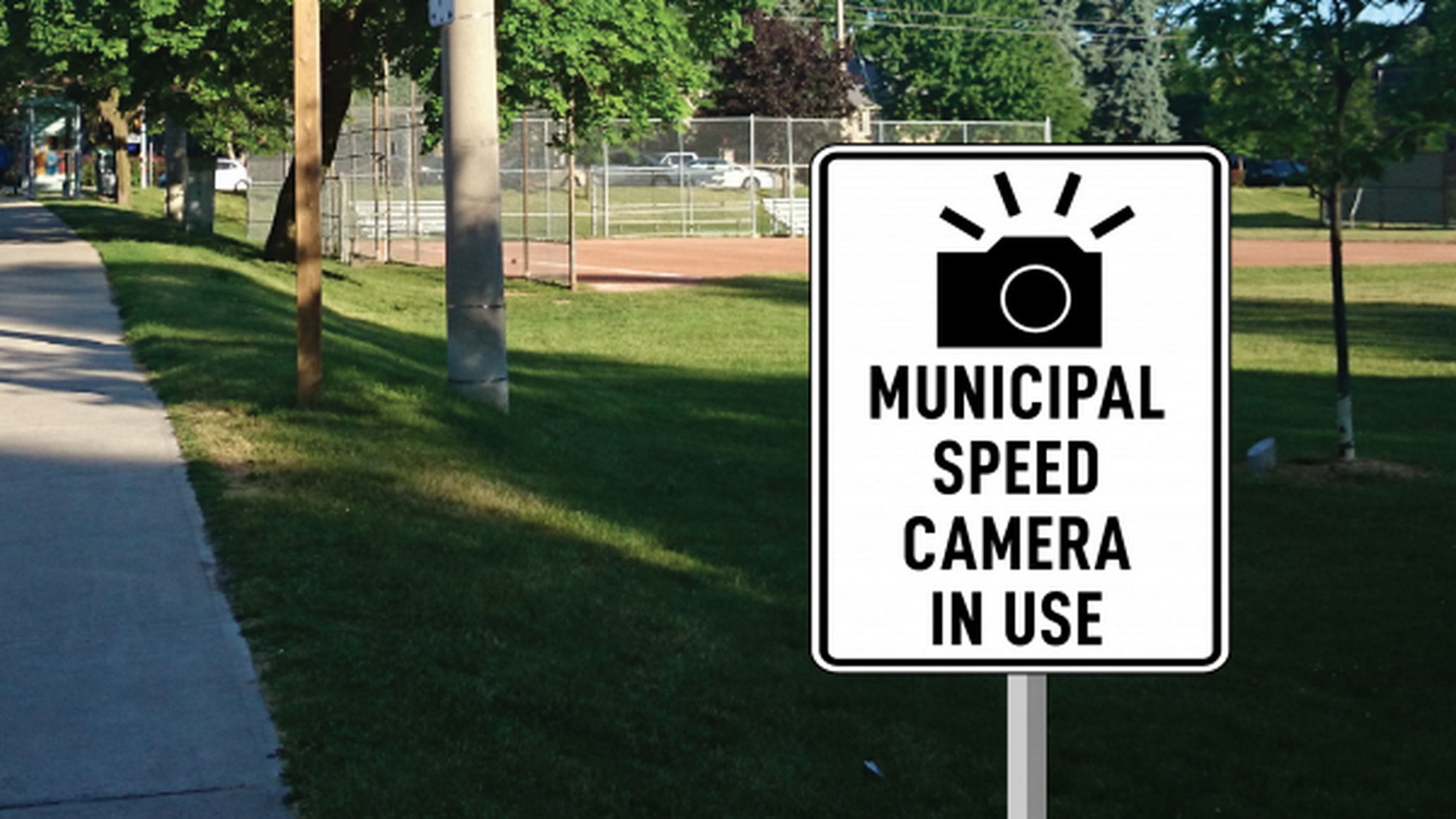
Toronto removed speed cameras and speeding jumped 480% – but the statistics need context
After Toronto removed its speed cameras, speeding increased at nearly every former camera location, with advocates citing a 400–480% spike. However, analysts caution that the largest percentage jumps come from very small baseline numbers and that fatality data is ambiguous. Politicians are now calling for the return of automated speed enforcement.
Full text
Toronto found higher speeds at nearly every former camera location.
The report’s biggest percentages come from very small starting numbers.
The statistics appear to show major changes when fatality data is murky.
Toronto just released a new report on speeding, and initially, it sounds like a full-on traffic apocalypse. Advocates are warning about a 400 percent spike in speeding. Experts say the results were “completely predictable.” Politicians are demanding the return of automated enforcement.
var adpushup = window.adpushup = window.adpushup || {que:[]};
adpushup.que.push(function() {
if (adpushup.config.platform !== "DESKTOP"){
adpushup.triggerAd("0f7e3106-c4d6-4db4-8135-c508879a76f8");
} else {
adpushup.triggerAd("82503191-e1d1-435a-874f-9c78a2a54a2f");
}
});
Yet buried beneath all of those attention-grabbing percentages is a much smaller number that may tell us far more about what actually happened. That number is 4.8.
This week, Toronto released its first major analysis of traffic speeds following Ontario’s decision to eliminate municipal automated speed enforcement programs in November 2025. The report found that speeds increased at 101 of 104 locations studied. That’s a pretty compelling finding on its own and strong evidence that the cameras influenced driver behavior.
Read: Canadians Keep Tearing Down Hundreds Of Speed Cameras In Toronto As Public Anger Boils Over
var adpushup = window.adpushup = window.adpushup || {que:[]};
adpushup.que.push(function() {
if (adpushup.config.platform === "DESKTOP"){
adpushup.triggerAd("ea4d4b5a-f8e5-4d5d-9d9a-53a3b956b6cd");
} else{
adpushup.triggerAd("44c0a4dc-e25b-4ba5-ac64-2c510461b92a");
}
});
The statistic drawing the most attention, however, is a reported 380 to 480 percent increase in some categories of speeding depending on which roads are being examined. On paper, that sounds catastrophic. The reality is more complicated.
The Numbers Behind The Headline
Credit: General Motors
The city’s largest increase involved drivers traveling 16 km/h (10 mph) or more above the speed limit on roads posted at 50 km/h (31.1 mph) or higher. During speed camera operation, that group accounted for just 0.5 percent of vehicles. After the cameras disappeared, it increased to 2.9 percent.
In other words, two statements can be true at the same time. Speeding increased by roughly 480 percent and by just 2.4 percentage points. The first sounds like chaos, the second sounds like barely a blip on the radar. Neither is technically wrong. But they create dramatically different impressions.
var adpushup = window.adpushup = window.adpushup || {que:[]};
adpushup.que.push(function() {
if (adpushup.config.platform !== "DESKTOP"){
adpushup.triggerAd("bb7964e9-07de-4b06-a83e-ead35079d53c");
} else {
adpushup.triggerAd("9b1169d9-7a89-4971-a77f-1397f7588751");
}
});
That’s why the most important number in the report isn’t 480 percent. It’s the average increase in operating speed across all locations studied: 4.8 km/h (3 mph). Yes, three miles per hour… or the top speed of the world’s fastest three-toed sloth. I wish I were joking.
To be clear, while 3 mph isn’t very much at all, it isn’t nothing. Traffic safety researchers have repeatedly shown that even small increases in speed can affect stopping distances and crash severity. The report’s findings deserve attention. What it doesn’t necessarily justify is some of the rhetoric that followed.
What The Fatality Data Shows
Several experts and advocates pointed to the report as proof that removing cameras has made Toronto’s roads more dangerous. Yet the city’s own fatality data doesn’t really support that conclusion, at least not yet.
var adpushup = window.adpushup = window.adpushup || {que:[]};
adpushup.que.push(function() {
if (adpushup.config.platform !== "DESKTOP"){
adpushup.triggerAd("b25ecba7-3bbb-4ea7-a3a8-dbea91695c07");
} else {
adpushup.triggerAd("e46c436a-adeb-4b5e-a2c7-56bc36561c10");
}
});
Toronto recorded 25 fatal collisions between December 2025 and May 2026 following the removal of speed cameras. That’s higher than in some recent years. It’s also exactly the same number recorded during the same six-month period in 2021-2022 when automated enforcement was fully operational.
The report itself acknowledges that fatalities fluctuate significantly from year to year and that a six-month window isn’t sufficient to establish meaningful trends. Then there’s another question that almost nobody seems interested in asking. If speed cameras were so effective because they forced drivers to obey posted limits, what does that say about the roads themselves?
Infrastructure Is The King Of Speed Reduction
Credit: City of Toronto
University of Toronto professor Matti Siemiatycki told CTV News that speed bumps aren’t practical on major roads like Finch, Steeles, or Bathurst. That’s a fair point. Few people would argue for covering major arterial roads with speed humps.
But if physical traffic calming is considered impractical, and cameras are considered essential, then we’re left with an uncomfortable possibility. Perhaps many of these roads naturally encourage drivers to travel faster than the posted speed limit. We’ve seen the same situation in plenty of places that design roads like drag strips and then wonder why people drive above the limit.
Ultimately, it shifts the conversation. The debate stops being about reckless drivers and starts becoming a discussion about road design, enforcement, and whether cities are using cameras to control speeds on roads engineered for entirely different driving behavior. Toronto’s report successfully demonstrates that drivers got 3 mph faster after cameras disappeared. That’s difficult to dispute.
What it doesn’t prove is that the city suddenly became dramatically more dangerous. Nor does it answer a bigger question. If enforcement is the only thing keeping speeds down on some roads, are speed cameras fixing driver behavior, or compensating for infrastructure that encourages it in the first place?
That’s a conversation worth having. And it’s far more interesting than a silly 480 percent headline.
Photo Credits: City of Toronto
Comments
No comments yet



















Comments
No comments yet — be the first to weigh in 👇
No comments yet. Be the first!