Full text
Ford expanded a seat recall to cover nearly 388,000 Explorers and Aviators.
Second-row seats can tip or slide unexpectedly as the vehicle is moving.
Some affected vehicles had already received the previous recall repair.
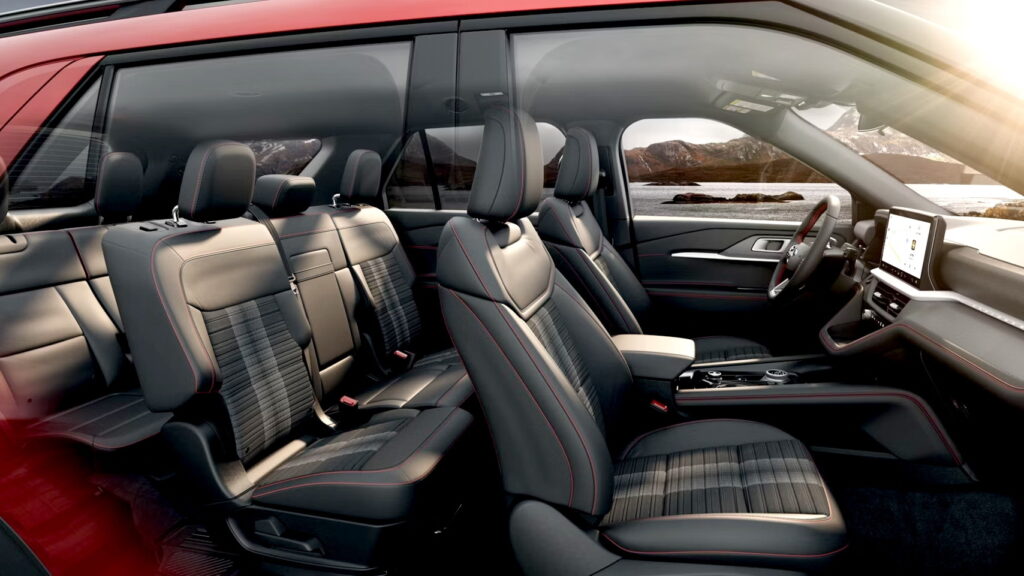
Ford is recalling another 387,911 SUVs after discovering the problem behind a previous safety campaign wasn’t limited to the vehicles it originally identified. The expanded recall covers 2020-2026 Ford Explorer and 2020-2027 Lincoln Aviator models equipped with second-row easy-entry seats. More notably, it also includes some vehicles that had already undergone the original repair, suggesting the issue proved more persistent than first believed.
var adpushup = window.adpushup = window.adpushup || {que:[]};
adpushup.que.push(function() {
if (adpushup.config.platform !== "DESKTOP"){
adpushup.triggerAd("0f7e3106-c4d6-4db4-8135-c508879a76f8");
} else {
adpushup.triggerAd("82503191-e1d1-435a-874f-9c78a2a54a2f");
}
});
At the heart of the recall is the second-row seat’s easy-entry switch bezel. According to Ford , the bezel can become misaligned or unseat during normal use, causing the switch to bind or remain stuck in the pressed position. If that happens, the seat could unexpectedly tip forward or slide while the vehicle is in motion, increasing the risk of injury, especially during a crash.
Read: Ford’s Recalling A Quarter-Million Cars Because It Can’t Recall If It Fixed Them In 2018
The latest recall builds on campaign 25V393 , launched in June 2025. At the time, Ford traced the problem to incorrectly installed switch bezels supplied by its seat manufacturer and instructed dealers to inspect the bezel installation and replace damaged components. Production changes and additional quality checks convinced Ford the issue had been contained. Turns out, it wasn’t.
var adpushup = window.adpushup = window.adpushup || {que:[]};
adpushup.que.push(function() {
if (adpushup.config.platform === "DESKTOP"){
adpushup.triggerAd("ea4d4b5a-f8e5-4d5d-9d9a-53a3b956b6cd");
} else{
adpushup.triggerAd("44c0a4dc-e25b-4ba5-ac64-2c510461b92a");
}
});
In late April 2026, Ford reviewed new field reports involving vehicles built after the original recall cutoff and identified five additional cases of unintended second-row seat movement while driving. The company also found four reports involving vehicles that had already received the earlier recall repair.
Those findings prompted a new investigation, which ultimately led Ford to expand the recall population to include all affected vehicles built through June 24, 2026. That’s when the original bezel design was finally removed from production. As of June 16, Ford had identified 14 reports of unintended seat movement linked to the defect.
Eight of the vehicles involved weren’t covered by the previous recall, while six were SUVs already repaired under the earlier campaign. Ford says it’s aware of a single customer complaint filed with NHTSA, though it knows of no crashes or injuries tied to the condition. The fix has dealers swapping the easy-entry switch bezel for one with stronger retention force, which should, in theory, keep it from working loose… again.
var adpushup = window.adpushup = window.adpushup || {que:[]};
adpushup.que.push(function() {
if (adpushup.config.platform !== "DESKTOP"){
adpushup.triggerAd("bb7964e9-07de-4b06-a83e-ead35079d53c");
} else {
adpushup.triggerAd("9b1169d9-7a89-4971-a77f-1397f7588751");
}
});








Comments
No comments yet — be the first to weigh in 👇
No comments yet. Be the first!